Self-Portrait in a Velvet Cap with Plume
Rembrandt Van Rijn
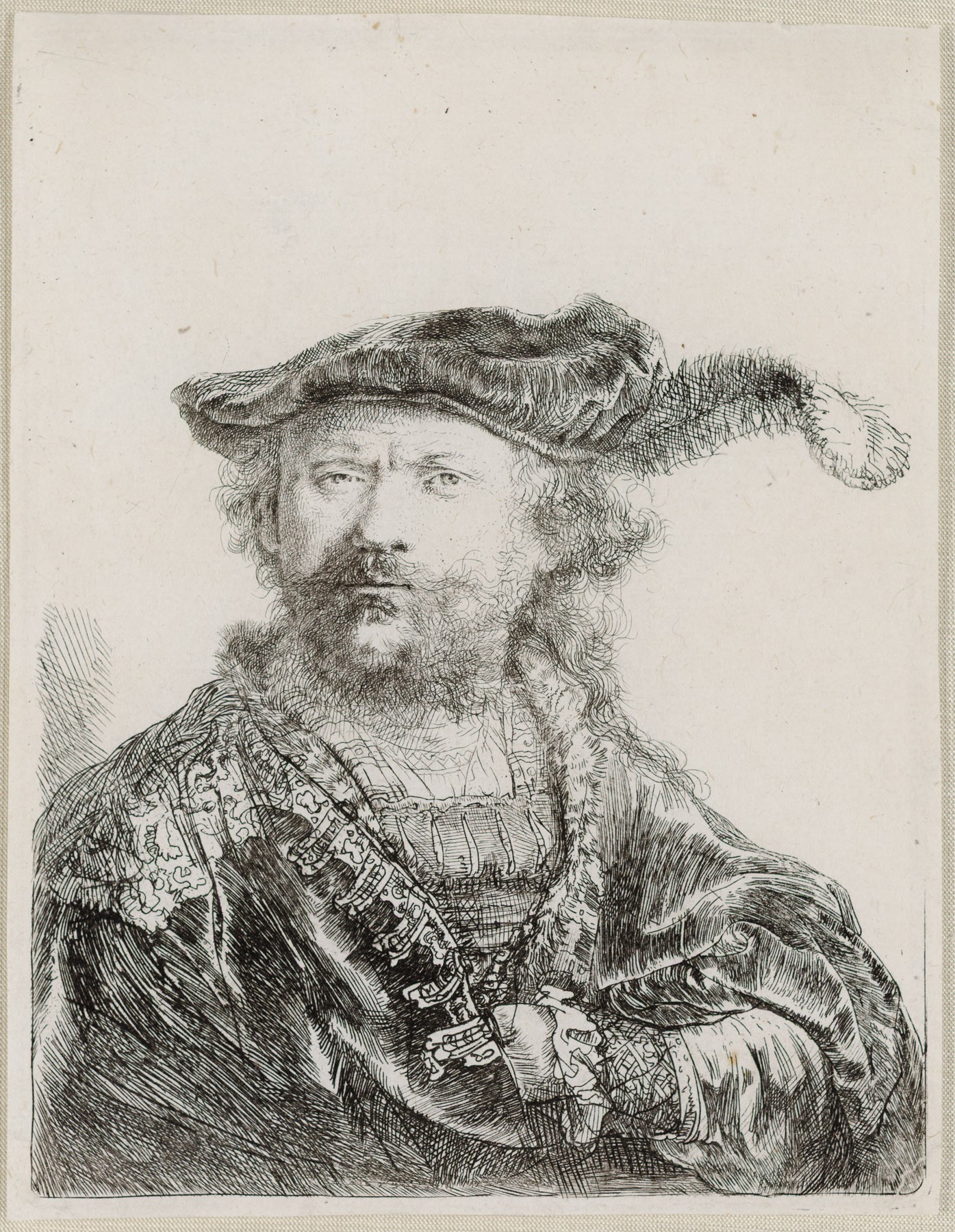
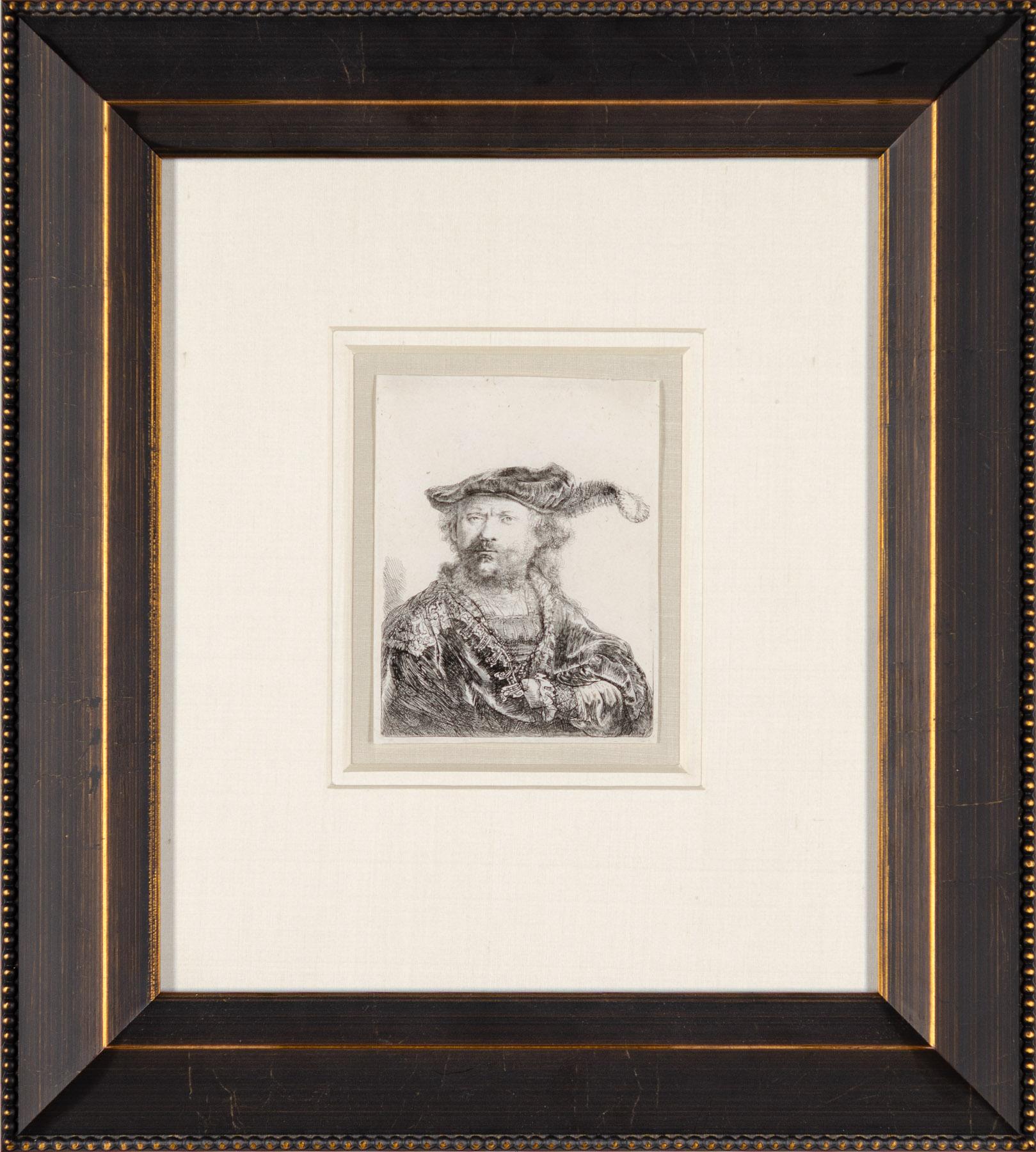
Self-Portrait in a Velvet Cap with Plume
etching
1638
An original Rembrandt Van Rijn etching.
1638
Original etching printed in black ink on laid paper.
A clear and clean 18th century impression of Bartsch’s only state, Usticke’s second state of three, New Hollstein’s third state of four, printed after the appearance of the faint diagonal scratch running down from the upper left corner, the curved lines of shading on the forehead extend over the brim of the cap, but prior to rebiting of the plate and the re-etching of the signature in the subsequent state.
Catalog: Bartsch 20; Hind 156; Biorklund-Barnard 38-B; Usticke 20 ii/iii; New Hollstein 170 iii/iv
Rembrandt’s self-portraits always tell us how he feels about himself. In 1638 he feels prosperous: his shirt and jacket are expensive and stylish; the plain artist’s beret has been supplanted by a crushed velvet hat with a plume; he has grown whiskers – all befitting a man with much revenue, a costly household and admiring students. Rembrandt also feels cocky: his bearing is aristocratic; his face and eyes convey a certain smugness; his hand is thrust jauntily into the folds of his garment. The scale and ostentation of this self-portrait contrast sharply with the modest, intimate studies of 1630-1631, which reveal only his head and shoulders. Yet within five years of this fine reflection of 1638, Rembrandt’s popularity as a portraitist for the wealthy Amsterdam bourgeoisie would fade, his beloved wife Saskia and his mother would be dead, and the resulting financial and emotional turmoil would bring a mature understanding of human fragility to Rembrandt’s art and his views of himself.